
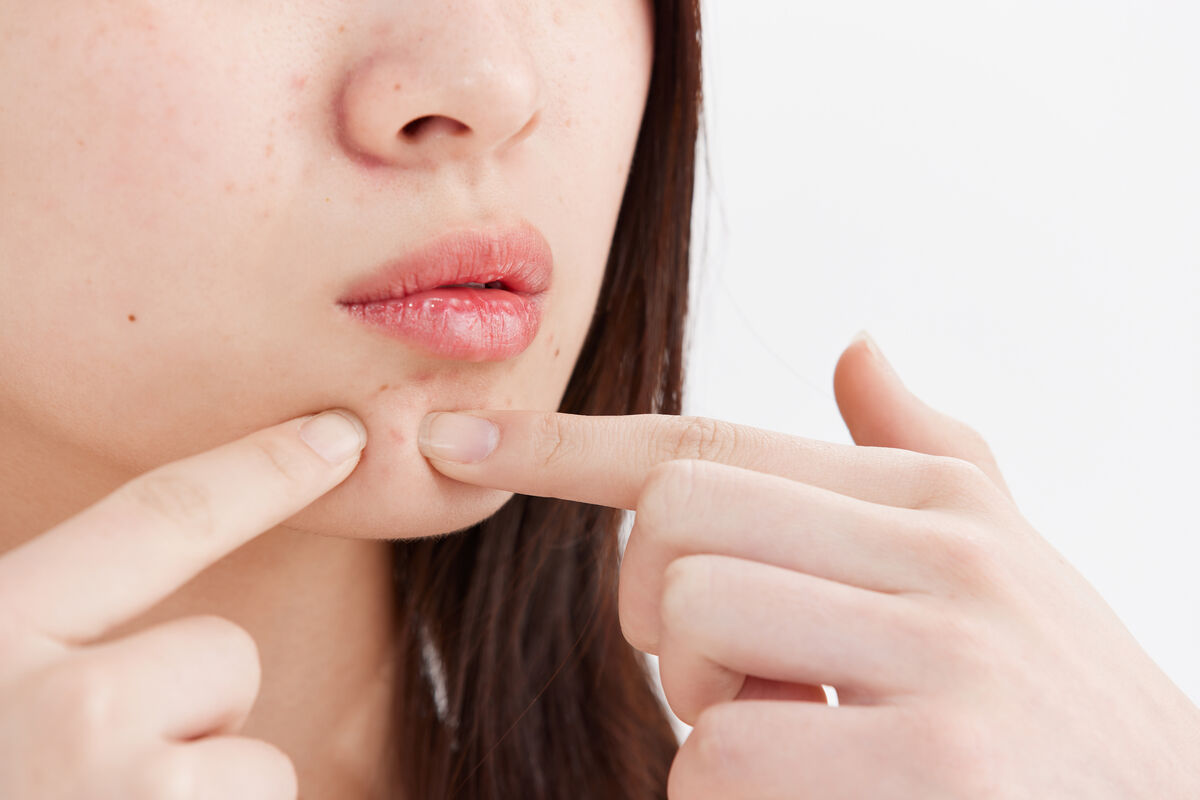
Red bumps on the face are often assumed to be acne. Sometimes, though, the real cause is rosacea — a different condition that needs a different approach. Using the wrong products can make things worse, so it helps to know the signs.
Signs that point to acne
- Blackheads and whiteheads (comedones). These are the hallmark of acne and are not a feature of rosacea.
- Breakouts on the face, chest, shoulders or back.
- Oily skin, and flares linked to hormonal changes.
- Often begins in the teenage years, although adult acne is common.
Signs that point to rosacea
- Persistent redness and flushing across the central face — cheeks, nose, chin and forehead.
- Small visible blood vessels.
- Burning, stinging or sensitivity to many skincare products.
- Flares triggered by heat, sun, alcohol, spicy food, hot drinks or stress.
- Most often begins after age 30.
- Sometimes dry, gritty or irritated eyes.
Why the difference matters
Many acne treatments — strong exfoliants, drying spot treatments and some retinoid routines — can irritate skin affected by rosacea. Rosacea, in turn, responds to anti-inflammatory treatments, trigger management and, for persistent redness, light or laser treatments.
It is also possible to have both conditions at once, or to have a look-alike condition such as perioral dermatitis or seborrheic dermatitis. A dermatologist's exam is the most reliable way to know.
What you can do now
- Use a gentle, fragrance-free cleanser and moisturizer.
- Wear a broad-spectrum sunscreen every day.
- Keep a short diary of flares and what preceded them.
- Avoid scrubbing, picking or switching products frequently.
If redness or bumps have lasted more than a few weeks, or over-the-counter acne products are making your skin sting, it's a good time to see a dermatologist.
Learn more about acne treatment and rosacea treatment at DR WW Dermatology, or request a medical dermatology visit.
This article is for general education and is not a substitute for a medical evaluation. If you have questions about your skin, please request an appointment with a dermatologist.